Dancheong Traditional Painting Complete Guide 2026
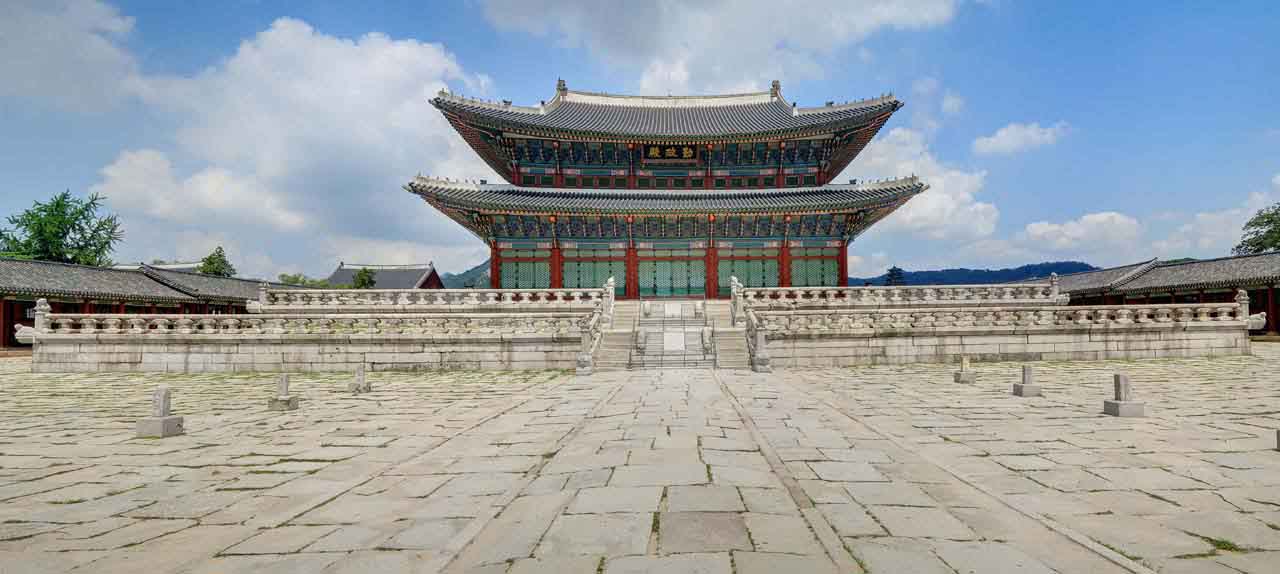
Dancheong (丹靑) is the traditional Korean technique of painting wooden structures to protect and decorate them. It preserves timber for centuries and symbolizes the beauty of Joseon royal architecture.
What is Dancheong?
Dancheong derives from the characters "red" (丹) and "blue/green" (靑). It refers to the traditional architectural color system centered on red and blue hues, applied to temples, palaces, royal tombs, and other structures.
The primary purpose is wood protection. A mixture of natural pigments and animal glue seals timber against moisture, mold, and insects. The secondary purpose is decoration and symbolism. Colors and patterns vary by building grade, becoming increasingly elaborate from houses to palaces and temples.
Application Process:
Dancheong application involves three stages: ① Base coat — white pigment applied to the wood surface, ② Underdrawing — basic patterns sketched, ③ Main coloring — five colors applied in full. A final animal-glue treatment protects the pigments.
Five Colors (五方色)
The five traditional colors (obangsaek) originate from Eastern philosophy, each associated with a cardinal direction, element, and symbolism.
Blue (靑): Blue (靑) — East, Spring, Wood. Symbolizes birth and growth.
Red (赤): Red (赤) — South, Summer, Fire. Symbolizes passion and protection.
Yellow (黃): Yellow (黃) — Center, Earth, Soil. Symbolizes centrality and stability.
White (白): White (白) — West, Autumn, Metal. Symbolizes purity and harvest.
Black (黑): Black (黑) — North, Winter, Water. Symbolizes depth and humility.
In palace dancheong, red and blue dominate. Yellow accents the center and structural elements, white serves as background and borders, and black defines outlines and shadows.
Dancheong Patterns
Dancheong patterns are derived from nature and transformed into geometric designs. They range from simple to highly elaborate depending on the building's size and function.
Lotus Pattern (蓮文): Lotus pattern (蓮文) — The most commonly used motif, symbolizing the Buddha's enlightenment and purity. Frequently seen on temple pillars and eaves.
Cloud Pattern (雲文): Cloud pattern (雲文) — Symbolizing divinity and eternity. Widely used on temple ceilings and walls.
Flower Pattern (花文): Flower pattern (花文) — Chrysanthemum, peony, and cherry blossom motifs symbolizing abundance and beauty. Primarily found on palace eaves and doors.
Geometric Patterns: Geometric patterns — Tangchao (唐草), thunder (雷), and dragon-head (螭首) patterns that indicate the building's grade and hierarchy.
Palace-Specific Dancheong
Each palace has distinct proportions of primary colors and pattern styles, reflecting the building's function and royal hierarchy.
Gyeongbokgung
Gyeongbokgung — The most balanced use of blue and red. Different saturation levels create a grand yet refined impression.
Changdeokgung
Changdeokgung — Higher proportion of red, giving a warm and vibrant appearance. Rear garden buildings feature softer tones that blend with nature.
Gyeonghuigung
Gyeonghuigung — Dominated by blue-white tones. A sober and calm atmosphere reflecting the palace's emphasis on scholarship and etiquette.
Changgyeonggung
Changgyeonggung — Harmonious blend of yellow and red. Warm, soft coloring befitting a royal living space.
Deoksugung
Deoksugung — Mixed with Western architecture, dancheong is proportionally less prominent. Seokjojeon maintains a stone exterior without dancheong.
Restoration Techniques
Modern dancheong restoration respects traditional techniques while incorporating scientific analysis.
Scientific Analysis: Scientific analysis — Pigments from existing layers are sampled and analyzed via X-ray fluorescence (XRF) to reconstruct original natural pigment compositions.
Natural Pigments: Natural pigments — Traditional dancheong uses mineral pigments such as jinssa (pearl red), gunjacheong (indigo), yeoncheong (light blue), hwangto (yellow earth), and baekto (white earth). Synthetic pigments are avoided due to shorter lifespan.
Restoration Steps: Restoration steps — ① Cleaning (removing old paint) → ② Timber repair (replacing rotted sections) → ③ Base coat → ④ Underdrawing → ⑤ Main coloring → ⑥ Animal-glue finish. The full process takes months to years depending on building size.
Recent Challenges: Recent challenges — Climate change accelerates pigment degradation, and urban pollution poses additional problems. The National Research Institute of Cultural Heritage is developing more durable traditional pigments.
When visiting palaces, observe the dancheong patterns on eaves and pillars up close. You'll notice that the same patterns vary in size and color intensity depending on the building's grade.
Additional Tips:
- Dancheong colors appear different depending on viewing angle and lighting
- Temple dancheong is often more elaborate than palace dancheong
- Hanbok rental shops offer dancheong-colored hanbok
- National Research Institute of Cultural Heritage offers dancheong experience programs
- Pattern complexity varies with the building's official grade