BTS Comeback Edition

March 2026 Gwanghwamun comeback — first live palace stage since Fallon 2020

Updated: September 2026 · Seoul 1-day walking route · 10 stops

From the Nonhyeon former-building area via Yongsan, Geunjeongjeon and Gyeonghoeru, to Gwanghwamun plaza — a 10-stop exterior-first day pilgrimage.

BTS Seoul Pilgrimage — Walking Route Map

A gold polyline connects all 10 stops. The cards below stay readable even with JS disabled.

Map tiles © OpenMapTiles / OpenStreetMap contributors · Route line painted #FFD700

Pilgrimage Stops (10)

Old BigHit Building (Nonhyeon) — Known as the Starting Point
Pexels: Elina Volkova
Stop 1

Old BigHit Building (Nonhyeon) — Known as the Starting Point

The former company building area in Nonhyeon, known as the early-days base. Visit as an exterior photo stop; no verified interior route is published, so this guide covers the exterior only.

A place often mentioned in stories from around the debut era. The building is in active use, so please view quietly from the exterior.

📍Former BigHit building area, Nonhyeon-dong, Gangnam-gu, Seoul
🚇Around Hak-dong Station, Subway Line 7 — short walk
⏱10–15 min (exterior stop)
Yoojung Sikdang — Known as a Regular Restaurant (Exterior + Map)
Pexels: Jakob Jin
Stop 2

Yoojung Sikdang — Known as a Regular Restaurant (Exterior + Map)

A restaurant in the Nonhyeon area, known as a regular haunt. It is a working eatery: interiors only with owner permission — the default stop is an exterior + map card.

Mentioned in connection with regular-visit stories from around the debut era. No seat-level claims are made — visit with dining etiquette.

📍Yoojung Sikdang area, Nonhyeon-dong, Gangnam-gu, Seoul
🚇3–5 min walk from the former-building area
⏱40 min–1 hour with a meal (10 min exterior-only)
HYUGA — Known from Café Stories (Exterior + Map)
Pexels: Markus Winkler
Stop 3

HYUGA — Known from Café Stories (Exterior + Map)

A café in the Nonhyeon area, known from fan-visit stories. A working shop: interiors only with owner permission — the default stop is an exterior + map card.

Mentioned in connection with break-time visit stories. When using the shop, fellow customers come first.

📍HYUGA area, Nonhyeon-dong, Gangnam-gu, Seoul
🚇3–5 min walk from the Yoojung Sikdang area
⏱30–40 min with a drink (10 min exterior-only)
HYBE Headquarters (Yongsan) — Exterior Long Shot + Map
Pexels: Elina Volkova
Stop 4

HYBE Headquarters (Yongsan) — Exterior Long Shot + Map

The current headquarters building on Hangang-daero, Yongsan. A working office: no interiors — view the exterior from long-shot points across the river and bridge area only.

The symbolic exterior of the current base of activities. Keep it a short long-shot stop, avoiding commute rush hours.

📍HYBE HQ area, Hangang-daero, Yongsan-gu, Seoul
🚇Around Samgakji Station (Lines 4/6) and Yongsan Station (Line 1)
⏱10–15 min (long-shot stop)
National Museum of Korea — Known as a Traditional-Aesthetics Reference
Pexels: Jeffry Surianto
Stop 5

National Museum of Korea — Known as a Traditional-Aesthetics Reference

The National Museum of Korea in Yongsan. Its permanent crafts and painting galleries are described as references for stage and costume aesthetics.

Traditional patterns and the five-direction color language are described as seeping into stage design. A study-and-appreciation space, not a filming location.

📍137 Seobinggo-ro, Yongsan-gu, Seoul — National Museum of Korea
🚇Ichon Station (Line 4 / Gyeongui-Jungang), Exit 2 — 5 min walk
⏱1–2 hours (permanent galleries)
Geunjeongjeon Hall, Gyeongbokgung — Known as Architectural Inspiration for Stage Design
Pexels: Line Knipst
Stop 6

Geunjeongjeon Hall, Gyeongbokgung — Known as Architectural Inspiration for Stage Design

The main throne hall area of Gyeongbokgung, the primary palace of Joseon. Its dancheong coloring and stone terrace are widely cited as visual references for grand stage aesthetics.

Large-scale televised stage productions with palace motifs are described as drawing on the architecture of Geunjeongjeon. This is a visual reference space, not a filming location.

📍Geunjeongjeon area, Gyeongbokgung, 161 Sajik-ro, Jongno-gu, Seoul
🚇Subway Line 3, Gyeongbokgung Station, Exit 5 — 3 min walk
⏱1 hour–1.5 hours
Gyeonghoeru Pavilion — Known as a Reference for Waterside Stage Aesthetics
Pexels: Yena Kwon
Stop 7

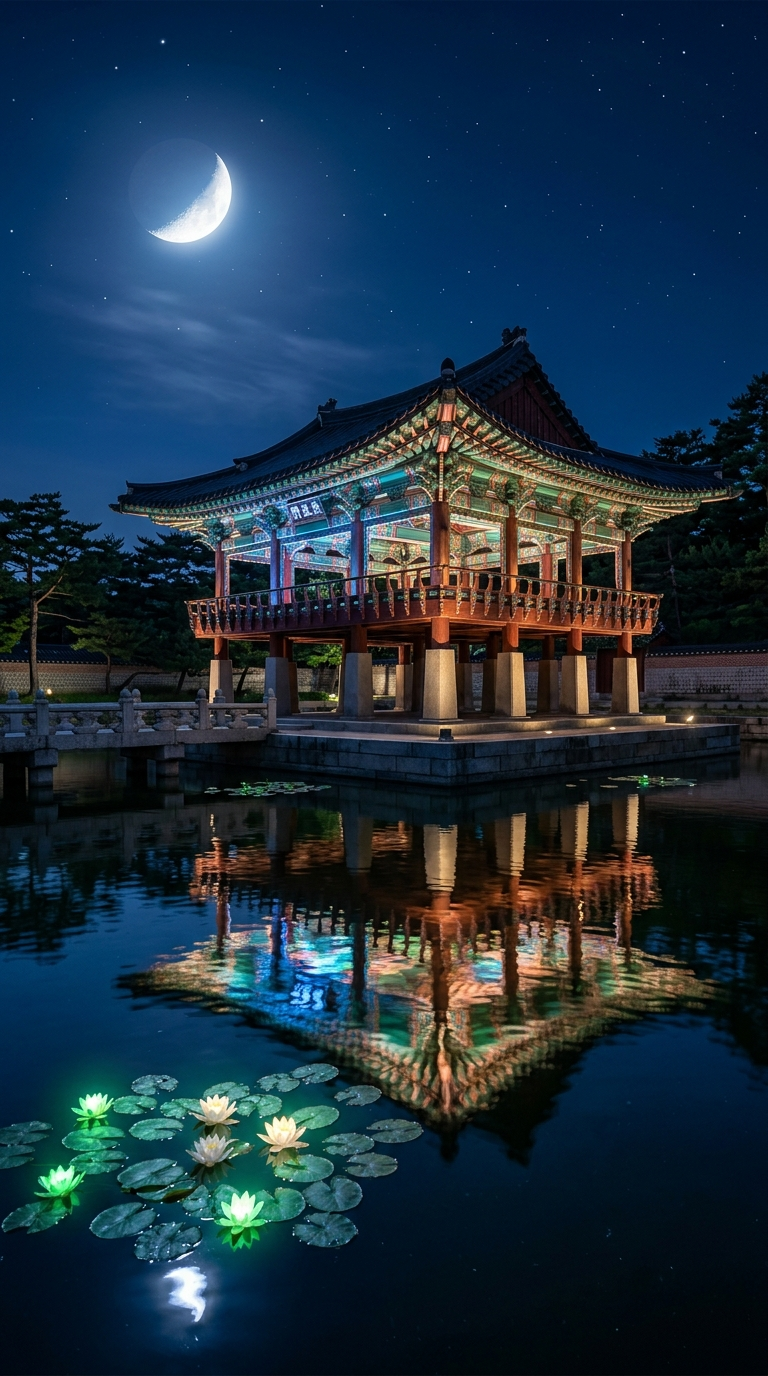
Gyeonghoeru Pavilion — Known as a Reference for Waterside Stage Aesthetics

The waterside pavilion inside Gyeongbokgung. Its moonlit pond and lotus staging are described as references for dreamlike stage aesthetics.

Over-water staging and moonlight direction are described as inspired by the Gyeonghoeru scenery. A visual reference space, not a filming location.

📍Gyeonghoeru area, Gyeongbokgung, 161 Sajik-ro, Jongno-gu, Seoul
🚇Inside Gyeongbokgung, 5 min walk west of Geunjeongjeon (after palace entry)
⏱20–30 min (within the palace visit)
Gwanghwamun — Known from Comeback Stage Stories
Pexels: Younyoun Park
Stop 8

Gwanghwamun — Known from Comeback Stage Stories

The plaza area in front of Gyeongbokgung. Known as a place mentioned in connection with large outdoor stage stories; follow on-site controls during actual events.

The plaza is described as a symbolic backdrop for large-scale performances. Dates and scale are not stated definitively here — follow official on-site notices.

📍Gwanghwamun area, Sejong-daero, Jongno-gu, Seoul
🚇Gyeongbokgung Station (Line 3) or Gwanghwamun Station (Line 5) — short walk
⏱20–30 min
Sungnyemun Gate — Known as a Night-View Point of the Old City
Pexels: Ricky Esquivel
Stop 9

Sungnyemun Gate — Known as a Night-View Point of the Old City

The south gate of old Seoul. Its night lighting and plaza scenery are described as the night-view point of the pilgrimage route.

Mentioned in connection with old-city night-view stories. View quietly from the plaza edges.

📍40 Sejong-daero, Jung-gu, Seoul — Sungnyemun Gate
🚇Seoul Station (Lines 1/4), Exit 4 — 5 min walk
⏱15–20 min
Seoul Forest & Footbridge — Known from Riverside Walk Stories
Pexels: Nadine K
Stop 10

Seoul Forest & Footbridge — Known from Riverside Walk Stories

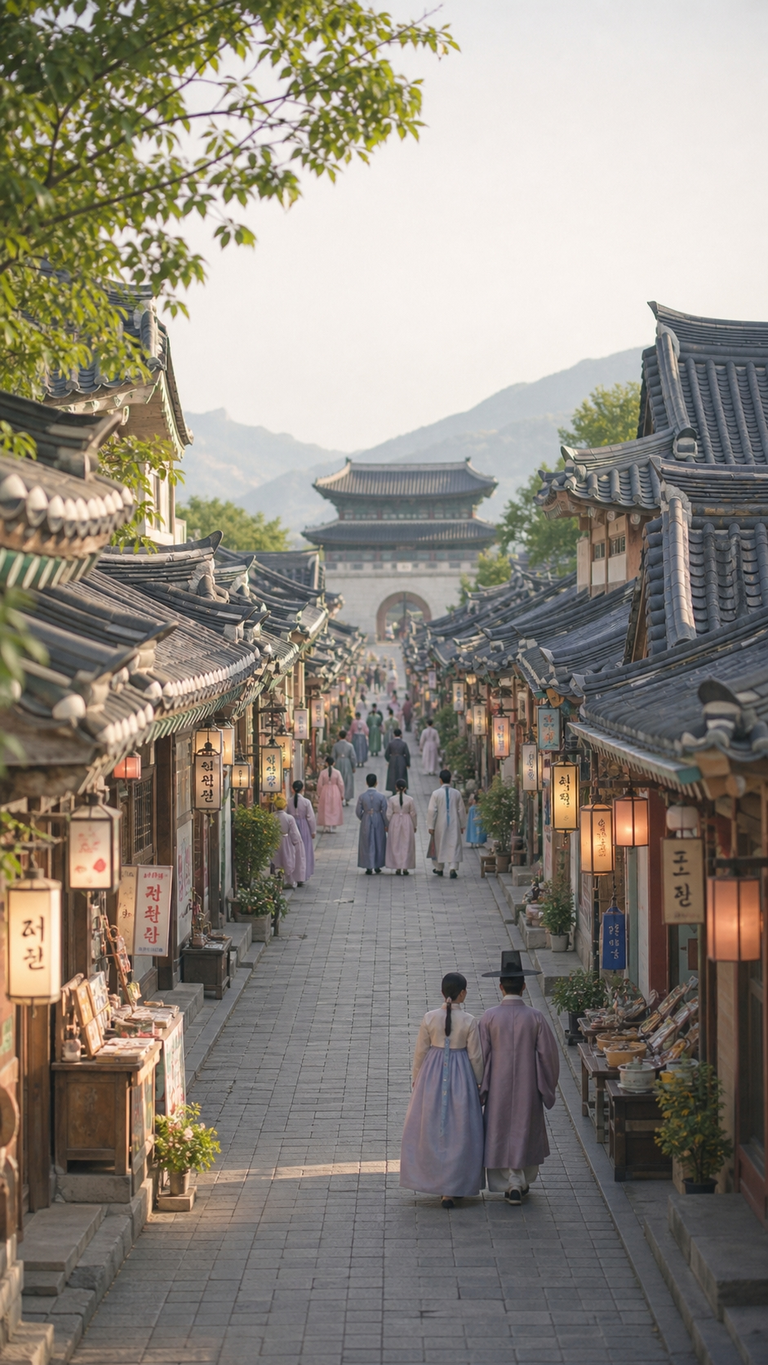
Seoul Forest in Seongdong-gu and the nearby footbridge. Mentioned in connection with riverside walk stories — a sunset stroll stop.

Mentioned in connection with rest-and-walk stories. The area shares paths with bikes and runners — keep to pedestrian lanes.
📍Seoul Forest area, Ttukseom-ro, Seongdong-gu, Seoul
🚇Seoul Forest Station (Bundang Line), Exit 3/4 — 5 min walk
⏱40 min–1 hour stroll

Next Routes

Beyond-Seoul Pilgrimage
地方

Beyond-Seoul Pilgrimage

Wanju · Samcheok · Buan · Jecheon · Yongin — beaches, hanok, and set-park scenery.

Back to BTS Hub
總覽

Back to BTS Hub

Comeback timeline and both routes at a glance.

Frequently Asked Questions

Can this route be done in one day?
All 10 stops fit a one-day subway-and-walking plan: Nonhyeon (1–3) → Yongsan (4–5) → Gyeongbokgung & Gwanghwamun (6–8) → Sungnyemun & Seoul Forest (9–10). Check museum and palace hours first.
Can I enter the buildings?
The former building, restaurants, café, and HYBE HQ are exterior-only stops — no interior route is published. The museum, palace, and parks admit visitors during normal hours.
Any photo rules?
Photograph places only. Avoid signboard close-ups, unauthorized interiors, and identifiable people. This page uses only commercially usable place photos; stops without photos use map cards.
When is the best timing for a bts seoul pilgrimage 2026 day?
Do Nonhyeon → Yongsan in the daytime while museum and palace are open, and finish at Gwanghwamun and Seoul Forest toward sunset. Follow on-site controls in event zones.